Why Standard Resveratrol Fails to Deliver

A label can promise 500 mg or 1,000 mg of resveratrol, but the number alone says very little about what your body can use. That is why standard resveratrol fails for many people seeking meaningful support for healthy aging, cognitive clarity, physical performance, or skin vitality. The challenge is not the potential of resveratrol. It is the gap between swallowing the ingredient and delivering it where it can matter.
Resveratrol has earned attention for good reason. It is a naturally occurring polyphenol studied for its role in cellular stress response, inflammation pathways, metabolic health, and brain health. Yet conventional resveratrol supplements often rely on a simple powder-in-capsule format that was never designed to solve the ingredient's central limitation: poor bioavailability.
Why Standard Resveratrol Fails Before It Can Work
Standard resveratrol is poorly soluble in water. That matters because supplements must dissolve in the digestive tract before they can be absorbed. When an ingredient dissolves poorly, only a limited amount may be available to pass through the intestinal barrier and enter circulation.
Even the fraction that is absorbed faces another obstacle. Resveratrol is rapidly metabolized in the intestine and liver through processes often called first-pass metabolism. The body converts much of it into metabolites, including glucuronides and sulfates, before substantial levels of unmodified, or "free," resveratrol can circulate.
This does not mean resveratrol is an ineffective compound. It means a conventional formulation can make its biological potential difficult to access. A large dose on the Supplement Facts panel does not automatically translate to a meaningful amount reaching circulation, peripheral tissues, or the central nervous system.
For consumers, this creates a familiar experience: they take a standard resveratrol product consistently, feel little change, and assume the ingredient itself was overhyped. Often, the more accurate question is whether the delivery system was capable of doing its job.
More Milligrams Do Not Solve a Delivery Problem
The most common response to low absorption is simply increasing the dose. That approach has limits.
Higher-dose conventional products can increase the amount of resveratrol entering the digestive system, but they do not remove the underlying barriers of poor solubility and rapid metabolism. In practical terms, this can mean asking the body to process more of an ingredient without proportionally improving delivery of the form researchers are often most interested in studying.
Higher doses may also be less comfortable for some individuals. Gastrointestinal upset is one of the practical reasons people discontinue certain high-dose polyphenol supplements. A formula that requires excessive dosing to compensate for weak delivery may be less appealing for long-term use, especially for people building a disciplined healthy aging routine.
The goal is not to take the biggest possible dose. The goal is to create efficient exposure with a formulation that supports absorption, consistency, and tolerability.
The Label Does Not Tell the Whole Story
When comparing resveratrol supplements, it is easy to focus on milligrams because they are visible and familiar. But two products with identical labeled doses can perform very differently depending on particle size, solubility, excipients, manufacturing quality, and delivery technology.
Think of resveratrol dose as the starting material, not the finished result. A 1,000 mg capsule that dissolves poorly and is rapidly metabolized may not outperform a lower-dose formulation engineered to improve how resveratrol moves through the body.
This is why formulation science deserves the same scrutiny as ingredient selection. In premium supplementation, what carries the ingredient is part of the active strategy.
Why Bioavailability Matters for Healthy Aging
Bioavailability describes the degree and rate at which an ingredient becomes available for use after it is consumed. For resveratrol, this is not a technical footnote. It is the foundation of whether a supplement can plausibly support the outcomes people care about.
Adults investing in healthy aging are not looking for a long list of trendy ingredients. They want support that aligns with real priorities: staying mentally sharp, maintaining energy and resilience, supporting physical performance, and preserving a vibrant appearance over time.
Those outcomes depend on consistency. A supplement does not need to create a dramatic overnight sensation to be valuable, but it should be formulated to provide reliable exposure rather than relying on hope, oversized dosing, or generic capsule economics.
Bioavailability is particularly relevant when cognitive support is part of the goal. The brain is protected by highly selective biological barriers. An ingredient may be absorbed to some degree in the gut without being efficiently available to the central nervous system. Formulations designed with CNS delivery in mind represent a more sophisticated standard than simply putting resveratrol into a capsule.
The Case for Micellar Resveratrol Delivery
Micellar delivery is designed to address the solubility challenge directly. Micelles are extremely small structures that can surround compounds with poor water solubility, helping keep them dispersed in an aqueous environment. For a lipophilic compound like resveratrol, this can improve the conditions for intestinal absorption.
A patented micellar formulation does more than make a product sound advanced. When properly developed and evaluated, it may help improve exposure while allowing for lower dosing than standard resveratrol. That has meaningful implications for daily use: less reliance on megadoses, a more efficient formulation strategy, and potentially better tolerability.
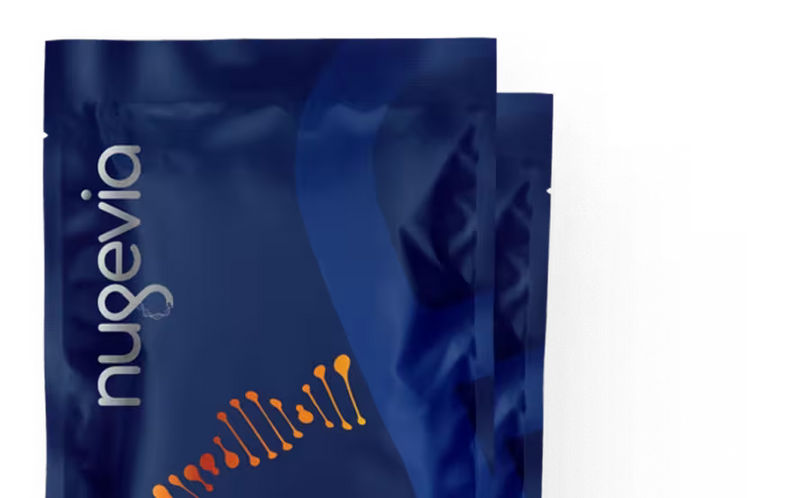
Nugevia uses JOTROL™, a patented micellar resveratrol delivery technology developed to improve resveratrol bioavailability and support central nervous system delivery. It reflects a higher standard for consumers who have moved beyond commodity supplements and want their formulation to be as intentional as their wellness goals.
That distinction is especially relevant for people who have already tried standard resveratrol without noticeable results. It may not be a question of whether resveratrol belongs in their routine. It may be a question of whether they have tried a form built to overcome the ingredient's known limitations.
What to Look for Beyond a Generic Resveratrol Capsule
Not every advanced-sounding resveratrol supplement is equal, and no delivery technology should be evaluated on branding alone. A credible product should clearly identify the form of resveratrol it uses and explain how its delivery system is intended to improve absorption.
Look for a formulation built around a defined technology rather than vague language such as "enhanced" or "maximum strength." Consider whether the company discusses dose efficiency, tolerability, and the rationale for the format. Science-led brands should also be willing to distinguish between the promise of an ingredient and the evidence supporting a specific formulation.
Your personal context matters as well. A performance-focused adult may prioritize energy, recovery, and physical resilience. Someone focused on cognitive longevity may care most about CNS delivery. Others may be seeking beauty-from-within support as part of a broader approach to collagen, skin quality, and healthy aging. The right product strategy begins with the outcome you want to support, then evaluates whether the formula is designed for that purpose.
Resveratrol Works Best as Part of a Standard
No supplement can replace the fundamentals that shape long-term health: nutrient-dense eating, resistance training, cardiovascular fitness, restorative sleep, stress management, and appropriate clinical care. Resveratrol is best viewed as a targeted addition to that foundation, not a substitute for it.
It is also wise to speak with a qualified healthcare professional before starting a new supplement, particularly if you are pregnant, nursing, managing a medical condition, preparing for surgery, or using prescription medications. Resveratrol may not be appropriate for every person or every regimen.
The better question is not, "How many milligrams can I take?" Ask whether the formula was engineered to deliver resveratrol efficiently enough to justify a place in your routine. When absorption becomes the standard, supplement decisions become clearer - and your healthy aging strategy becomes far more intentional.
chosen by experts