Resveratrol Dosage for Absorption: What Works

A 1,000 mg resveratrol capsule can look impressive on a label. But if very little of that ingredient reaches circulation in a usable form, the number does not tell the full performance story. The smarter question is not simply, “How much resveratrol should I take?” It is how to approach resveratrol dosage for absorption - with the formulation, consistency, and your individual tolerance in mind.
For adults investing in healthy aging, cognitive clarity, physical performance, or skin support, absorption is the difference between a generic ingredient and a meaningful nutrition strategy. Resveratrol has compelling biological relevance, but conventional forms have a well-known limitation: the body metabolizes them quickly.
Why resveratrol dosage alone can be misleading
Resveratrol is a polyphenol found naturally in grapes, berries, peanuts, and red wine. Most supplement labels use trans-resveratrol, the form most commonly studied for its potential role in cellular resilience, oxidative-stress response, metabolic health, and healthy aging pathways.
The challenge begins after swallowing it. Standard resveratrol is absorbed through the digestive tract, then rapidly converted into metabolites by the intestine and liver. This first-pass metabolism can leave relatively little unmodified resveratrol in circulation. A high-dose capsule may therefore deliver a large amount of ingredient while producing less exposure to the active parent compound than consumers expect.
That is why milligram comparisons are often incomplete. Two products can both list 500 mg of resveratrol, yet differ substantially in the amount and form that becomes available to the body. The delivery system, particle size, ingredient quality, and dose format all shape the outcome.
A larger dose is not automatically a better dose. Higher intakes may raise the likelihood of digestive discomfort for some people, without proportionally improving useful exposure. For a premium longevity routine, the goal is efficient delivery, not label inflation.
Resveratrol dosage for absorption: start with the formulation
There is no single best resveratrol dose for every person or every product. Research has examined a broad range of daily intakes, from modest supplemental amounts to gram-level protocols. Those studies do not translate into a universal recommendation, because the form of resveratrol, the population studied, the duration, and the outcome being measured vary significantly.
For standard, unformulated resveratrol, consumers commonly see products in the 100 mg to 500 mg daily range, with some formulas containing substantially more. That range reflects marketplace convention as much as it reflects absorption. A higher number may be appropriate in a research setting or a clinician-guided protocol, but it is not proof that more resveratrol is reaching its intended target.
Advanced delivery technologies change the calculation. Micellar formulations are designed to surround lipophilic compounds in microscopic structures that can improve dispersion in water and support absorption through the gut. This approach may help a lower labeled dose deliver more efficiently than a much larger conventional dose.
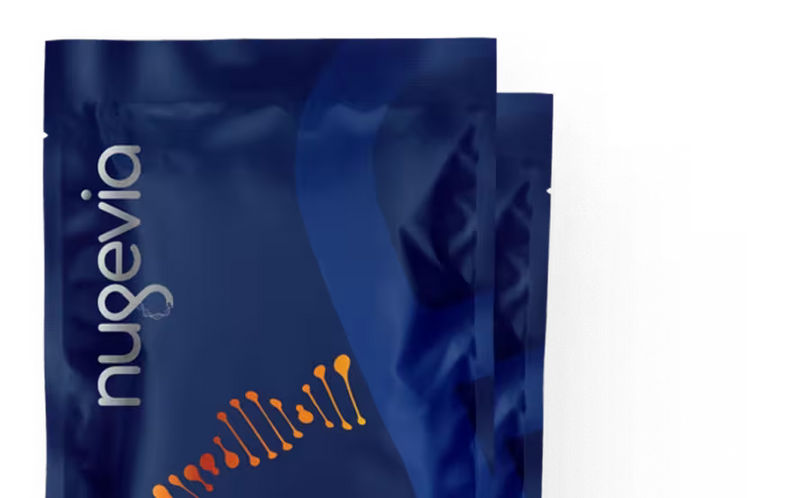
Nugevia uses JOTROL™, a patented micellar resveratrol delivery technology developed to improve bioavailability and support central nervous system delivery compared with standard resveratrol. The practical implication is straightforward: assess the technology behind the dose, not just the dose itself. A well-designed formulation can make a lower daily serving a more rational choice for consistent use and tolerability.
Look for trans-resveratrol and transparent serving information
A serious formula should clearly identify its resveratrol form and state the amount per daily serving. “Polygonum cuspidatum extract” alone is less informative than a label that specifies standardized trans-resveratrol content. Extracts can vary, and the total weight of an herb is not necessarily the same as the amount of active resveratrol.
Transparency also means being realistic about what a product is designed to do. A formula positioned for cognitive support may prioritize delivery characteristics differently than one intended for broad wellness or beauty-from-within support. The best dose is connected to the formulation’s intended use, not a race toward the highest milligram count.
Timing can support consistency, but it cannot fix a weak formula
For most people, taking resveratrol at the same time each day is more valuable than chasing a perfect clock time. A daily routine anchored to breakfast or another regular meal can improve adherence, which matters for any healthy aging strategy.
Resveratrol is fat-soluble, so taking a conventional supplement with a meal that contains some dietary fat may be a practical approach. Think eggs, yogurt, avocado, nuts, olive oil, or a balanced lunch rather than an empty stomach. Still, food is not a substitute for a delivery system engineered to address bioavailability. The impact of meals can vary by product and person.
If a label directs you to take the formula with food, follow that guidance. If it does not, use your tolerance as a guide. Some adults prefer a morning serving as part of an energy and focus routine, while others find that any time of day works well. Resveratrol is not a stimulant, so there is no universal need to take it before exercise or early in the day.
Splitting a daily amount into two servings may be useful with certain conventional, higher-dose products, especially if one full serving causes gastrointestinal discomfort. But do not split capsules, powders, or softgels unless the product instructions permit it. With advanced formulations, the recommended serving is designed around the delivery system and should be used as directed.
When less may be the more strategic choice
The most effective dosage is one you can take consistently and tolerate well. In supplement routines, the temptation is to equate intensity with results. Yet resveratrol is not a pre-workout ingredient where an immediate sensation confirms a serving. Its relevance is tied to ongoing cellular and systemic support, which makes disciplined daily use more meaningful than occasional mega-dosing.
A lower-dose, highly bioavailable formula can be a particularly sensible option for adults who have stopped using conventional resveratrol because of stomach upset, pill burden, or disappointment with generic products. It may also suit people building a broader longevity stack that already includes protein, omega-3s, fiber, movement, sleep support, and clinician-directed care.
Conversely, a conventional high-dose product may have a place in a protocol recommended by a qualified healthcare professional who understands your medical history and medications. The point is not that all high doses are inappropriate. It is that the dose must be interpreted in context.
Safety considerations before increasing your dose
Resveratrol supplements are generally well tolerated by many adults at typical supplemental amounts, but more is not risk-free. Digestive symptoms, including nausea, loose stools, or abdominal discomfort, become more likely at higher intakes. If those occur, reduce the serving or stop using the product and speak with a healthcare professional.
Resveratrol may affect platelet activity and may interact with medications. Consult a physician or pharmacist before use if you take anticoagulant or antiplatelet medication, regularly use NSAIDs, have a bleeding disorder, are preparing for surgery, or use prescription drugs with potential liver-enzyme interactions. People who are pregnant, breastfeeding, managing a medical condition, or under active treatment should seek individualized medical guidance before adding resveratrol.
Supplements are designed to complement foundational habits, not replace them. No resveratrol dosage compensates for chronically inadequate sleep, a nutrient-poor diet, or ignored cardiovascular risk factors. The strongest healthy aging plan remains layered: training, nutrition, stress management, preventive care, and targeted supplementation working together.
A practical way to choose your daily serving
Begin with the manufacturer’s recommended serving rather than self-prescribing a high dose. Use it consistently for several weeks, preferably in a repeatable daily routine, and pay attention to tolerance. If the product is conventional resveratrol, taking it with a meal may be reasonable. If it uses a specialized delivery platform, follow the label instructions because the formulation may be designed to perform differently.
Then evaluate the product beyond the front-label number. Is the source transparent? Does it identify trans-resveratrol? Does it explain its bioavailability strategy? Is the dose practical enough to sustain every day? These questions separate an informed purchase from a milligram-driven one.
The best resveratrol routine is not the one with the biggest number on the bottle. It is the one that delivers a well-formulated serving you can confidently use as part of a long-term commitment to vitality, performance, and healthy aging.
chosen by experts