Which Resveratrol Benefits Does Science Support?

A resveratrol capsule is only as valuable as the amount your body can absorb and use. That is the central issue behind resveratrol benefits: the ingredient has compelling biological activity, but standard forms have historically struggled with low bioavailability. For people investing seriously in healthy aging, cognitive clarity, sustained energy, and physical resilience, that distinction matters far more than a high number printed on a label.
Resveratrol is a polyphenol found naturally in the skin of red grapes, berries, peanuts, and Japanese knotweed. It has drawn decades of research interest for its influence on cellular stress-response pathways, inflammatory signaling, metabolic function, and vascular health. The research is promising, but it is not a license for exaggerated claims. The most useful way to evaluate resveratrol is to understand what it may support, what human evidence can and cannot establish, and why formulation determines whether supplementation has practical value.
Resveratrol Benefits Begin With Cellular Resilience
Cells are continually responding to physical activity, metabolic demand, environmental exposures, and the ordinary effects of getting older. Resveratrol is studied in part because it interacts with pathways associated with cellular stress adaptation, including sirtuins and AMP-activated protein kinase, often called AMPK. These pathways help regulate how cells manage energy, repair processes, and oxidative stress.
That does not mean resveratrol can stop aging or replace the fundamentals of health. Sleep, resistance training, cardiovascular fitness, protein intake, and a nutrient-dense diet remain the foundation. What resveratrol may offer is targeted nutritional support for people who want to reinforce the cellular systems involved in healthy aging.
Its antioxidant role also deserves context. Resveratrol does not simply act as a direct antioxidant that neutralizes free radicals on contact. Researchers are equally interested in its ability to influence the body’s own antioxidant defenses and stress-response mechanisms. This may be more relevant to long-term resilience than chasing a single, simplistic antioxidant score.
Cognitive Clarity and Brain-Focused Support
The brain has high energy demands and is especially sensitive to oxidative stress and inflammatory activity. Resveratrol has been investigated for its potential to support cerebral blood flow, neuronal signaling, and cognitive performance, particularly in adults concerned with preserving mental sharpness as they age.
Human findings are still developing. Some studies suggest potential benefits for aspects of memory, attention, or brain blood flow in specific populations, while others show more modest or mixed results. Differences in dosage, duration, participant health, and product formulation make broad conclusions difficult.
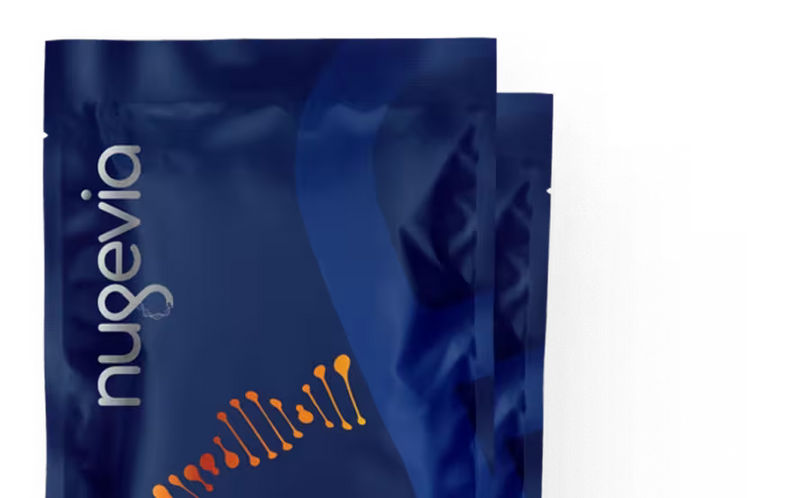
One practical consideration is central nervous system delivery. A resveratrol formulation designed to improve absorption and distribution may offer a more rational approach than taking large amounts of conventional powder and hoping enough reaches relevant tissues. Nugevia uses JOTROL™, a patented micellar resveratrol delivery technology developed to improve bioavailability and support delivery at lower doses than traditional resveratrol formulations. For consumers focused on cognitive clarity, the delivery system is not a technical footnote. It is part of the benefit proposition.
Cardiometabolic Health and Energy Pathways
Resveratrol has also been studied in relation to blood vessel function, glucose metabolism, insulin sensitivity, and markers of inflammation. These are interconnected areas: efficient metabolic regulation supports stable energy, while healthy vascular function helps deliver oxygen and nutrients throughout the body.
The evidence here is nuanced. In certain studies, especially among people with metabolic concerns, resveratrol supplementation has been associated with favorable changes in selected metabolic or cardiovascular markers. Results are not consistent across every trial, and supplementation should never be used as a substitute for clinician-guided care, prescribed medication, movement, or nutrition changes.
For a healthy, active adult, the value may be less about treating a specific condition and more about supporting the biological systems that underpin day-to-day performance. That could mean steadier energy during demanding weeks, better alignment with a training routine, or a thoughtful addition to a broader healthy aging plan. Individual experience will vary, and expectations should remain grounded in the evidence.
Skin Quality, Collagen, and Beauty From Within
Healthy skin reflects more than topical skincare. It is influenced by sun exposure, sleep, nutrition, hydration, hormonal changes, oxidative stress, and the integrity of collagen and the extracellular matrix. Resveratrol has gained attention in beauty-from-within routines because of its antioxidant and cellular-signaling properties.
Preclinical research suggests resveratrol may help support pathways involved in protecting skin from oxidative stress and maintaining a healthy collagen environment. Human evidence for visible skin outcomes is more limited than the marketing around the category sometimes suggests, so it is wise to view resveratrol as supportive rather than transformative.
For consumers who already prioritize daily SPF, adequate protein, strength training, and high-quality skincare, a well-formulated resveratrol supplement can fit naturally into a radiance-focused strategy. The goal is not to promise a cosmetic result from one ingredient. It is to support the internal conditions associated with resilient, healthy-looking skin over time.
Why Standard Resveratrol Often Falls Short
Traditional resveratrol supplements frequently rely on high milligram doses of trans-resveratrol in a conventional capsule or powder. The problem is that resveratrol is absorbed and metabolized quickly. After ingestion, much of it is converted into metabolites before meaningful levels of free resveratrol can circulate in the body.
This creates a familiar consumer frustration: an ingredient with impressive research credentials, a large dose on the label, and little confidence that the formulation can deliver on its potential. Taking more is not always the answer. Higher doses may increase the chance of digestive discomfort and do not automatically overcome formulation limitations.
Micellar delivery is designed to address that challenge. Micelles are tiny structures that help carry compounds with poor water solubility through the digestive environment. For resveratrol, this approach can improve absorption and may allow lower doses to be used more efficiently. This matters because bioavailability is the bridge between a promising molecule and a product capable of supporting real-world wellness goals.
How to Choose a Resveratrol Supplement With Purpose
A premium resveratrol product should be evaluated as a formulation, not just an ingredient. Start with the delivery technology and whether the brand clearly explains how it addresses resveratrol’s absorption challenge. Then consider whether the product has a defined purpose, such as cognitive support, performance, or skin radiance, rather than relying on a generic promise of “wellness.”
Dose matters, but context matters more. A lower dose in an advanced delivery format may be more compelling than a much larger dose of poorly absorbed standard resveratrol. Look for transparent quality standards, a clear source of resveratrol, and claims that reflect the limits of nutrition science rather than implying disease prevention or treatment.
Consistency is also more meaningful than occasional use. Healthy aging is built through repeated inputs over years: training, recovery, nutritional quality, stress management, preventive care, and targeted supplementation. Resveratrol belongs in that system, not outside it.
Who Should Use Extra Caution?
Resveratrol is generally well tolerated in research at commonly studied amounts, but “natural” does not mean appropriate for every person. Because it may influence platelet activity and interact with medication metabolism, people who use anticoagulants, antiplatelet drugs, or certain prescription medications should speak with a qualified healthcare professional before starting a supplement.
The same applies to people who are pregnant, breastfeeding, preparing for surgery, managing a chronic medical condition, or undergoing cancer treatment. A clinician who understands your medications and health history can help determine whether resveratrol fits your routine.
The strongest case for resveratrol is not a shortcut to better health. It is a science-informed choice for people who already value the disciplines of healthy aging and want a formulation engineered to make this well-studied polyphenol count.
chosen by experts