Can Resveratrol Support Mitochondrial Function?

Mitochondria do not simply determine how much energy you have for a workout. They influence how efficiently your body converts fuel into ATP, responds to metabolic stress, manages oxidative pressure, and maintains resilience with age. That makes the question, can resveratrol support mitochondrial function, more relevant than a passing wellness trend. The evidence suggests it may, but the real answer depends on formulation, dose, individual health status, and what “support” is expected to mean.
Can Resveratrol Support Mitochondrial Function?
Resveratrol is a polyphenol found naturally in grapes, berries, peanuts, and red wine. It became a longevity research focus because it interacts with cellular pathways connected to energy sensing, stress adaptation, and healthy aging.
In laboratory and animal research, resveratrol has been shown to influence proteins and signaling pathways associated with mitochondrial health, including SIRT1, AMPK, PGC-1alpha, and Nrf2. These pathways help regulate processes such as mitochondrial biogenesis - the creation of new mitochondria - as well as antioxidant defenses and metabolic flexibility.
That is the biological rationale. Human research is more nuanced. Some studies suggest resveratrol may support markers related to vascular function, glucose metabolism, inflammation, exercise adaptation, or cognitive performance in specific populations. Other trials find modest effects or no clear benefit. This variation is not surprising: mitochondrial function is difficult to measure directly in everyday clinical studies, and standard resveratrol has a well-known delivery problem.
The most accurate takeaway is that resveratrol is not a stimulant and does not “boost” cellular energy on demand. It may support the cellular systems that help mitochondria adapt, protect themselves, and perform efficiently over time.
Why Mitochria Matter for Performance and Healthy Aging
Mitochondria are often called the power plants of the cell, but that description is incomplete. They also help coordinate cellular signaling, calcium balance, inflammatory responses, and programmed cell turnover. When mitochondrial capacity declines or becomes less efficient, the effects can show up as reduced physical endurance, slower recovery, metabolic inflexibility, and diminished resilience under stress.
Mitochondrial changes are a normal part of aging. They are also influenced by sleep, exercise, nutrition, alcohol intake, insulin sensitivity, medications, illness, and environmental exposures. No single supplement can replace the foundational habits that preserve mitochondrial capacity.
Still, targeted nutrition can have a role. For adults focused on sustained performance, cognitive clarity, and healthy aging, the goal is not to chase a temporary feeling of energy. It is to support the cellular conditions associated with durable output.
The SIRT1 and AMPK connection
SIRT1 and AMPK are often described as cellular energy sensors. AMPK responds when cellular energy availability is low, while SIRT1 is involved in regulating gene activity related to metabolism, stress response, and mitochondrial maintenance.
Resveratrol has been studied for its potential to influence these pathways. One downstream target is PGC-1alpha, a regulator involved in mitochondrial biogenesis and oxidative metabolism. In practical terms, this is why resveratrol is frequently discussed alongside exercise, fasting-style metabolic signaling, and longevity nutrition.
However, signaling a pathway in a cell study is not the same as delivering a meaningful result in a person. The difference comes down to exposure: Does enough resveratrol reach circulation and target tissues in an active form to matter?
The Bioavailability Problem With Standard Resveratrol
Traditional resveratrol supplements often rely on high ingredient amounts while delivering inconsistent usable exposure. Resveratrol is poorly soluble in water and is rapidly metabolized after ingestion. A large portion may be converted into metabolites before free resveratrol has an opportunity to circulate broadly.
This is one reason the research can look compelling on paper yet feel disconnected from the consumer experience. More milligrams do not automatically mean more absorption, better tissue delivery, or a stronger outcome. Higher doses can also create avoidable gastrointestinal discomfort for some people.
For a premium longevity strategy, delivery technology deserves as much attention as the ingredient itself. A micellar formulation is designed to help a fat-soluble compound disperse more effectively in the digestive environment and improve absorption potential. It may allow lower amounts of resveratrol to produce exposure that conventional formats struggle to achieve.
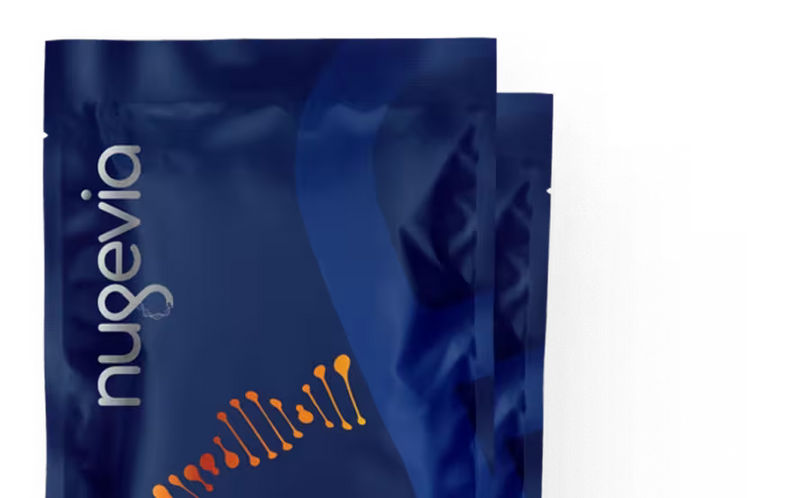
Nugevia uses JOTROL™, a patented micellar resveratrol formulation developed to address this absorption challenge and support enhanced bioavailability with lower-dose potential. That distinction matters for people who have tried generic resveratrol and are looking for a more advanced, science-led approach to daily use.
What Human Research Can and Cannot Say
Human studies on resveratrol have explored a wide range of outcomes: insulin sensitivity, blood flow, inflammation, exercise physiology, cognition, and measures of oxidative stress. Certain populations, particularly older adults or people with metabolic concerns, may be more likely to show measurable changes than younger, already healthy individuals.
At the same time, human studies vary widely in formulation, dosage, duration, participant health, and endpoints. A trial measuring glucose control cannot definitively prove improved mitochondrial function. A study of exercise performance may be affected by training status, diet, and recovery practices. This is why broad promises are not scientifically responsible.
The evidence supports a more disciplined position: resveratrol has plausible mechanisms relevant to mitochondrial function and healthy aging, and some human findings are encouraging. It should be viewed as a strategic component of a broader performance and longevity protocol, not a replacement for movement, protein-rich nutrition, restorative sleep, or medical care.
Does resveratrol work better with exercise?
Exercise is one of the most reliable ways to stimulate mitochondrial biogenesis and improve mitochondrial efficiency. Resveratrol may complement this signal in some circumstances, but the relationship is not as simple as “more is better.”
A few studies have raised the possibility that high-dose antioxidant-style interventions could blunt certain training adaptations in specific settings. Resveratrol is not merely a conventional antioxidant, and study results are mixed, but this is a useful reminder: training adaptations depend on carefully managed biological stress. People training intensely should avoid assuming that escalating supplement doses will accelerate results.
A better approach is consistency. Build your foundation around aerobic conditioning, resistance training, recovery, and nutrient-dense meals, then choose a well-formulated resveratrol product that fits your long-term goals.
Who May Consider Resveratrol for Mitochondrial Support?
Resveratrol may be of interest to adults who want to support energy metabolism and healthy aging without relying on stimulant-heavy formulas. That can include professionals managing demanding schedules, active adults prioritizing endurance and recovery, and midlife consumers seeking proactive cognitive and metabolic support.
Expectations should remain specific and realistic. The most meaningful benefits, if they occur, are likely to be gradual rather than dramatic. Think improved support for cellular resilience, not an immediate replacement for sleep or a pre-workout product.
Individual context matters. A person with excellent metabolic health, consistent training, and a nutrient-rich diet may notice a different effect than someone whose sleep, activity level, or glucose regulation needs attention. In many cases, improving those fundamentals will create the largest return.
Safety, Dosing, and Smart Use
Resveratrol is generally well tolerated in many studies, but tolerance is dose-dependent and formulations differ. Gastrointestinal symptoms can occur, particularly at higher conventional doses. Because resveratrol may affect platelet activity and interact with certain medications, people using blood thinners, antiplatelet drugs, diabetes medications, or complex prescription regimens should speak with a qualified healthcare professional before adding it.
The same applies to pregnancy, breastfeeding, planned surgery, and management of a chronic condition. A supplement should fit your health plan, not complicate it.
When evaluating a product, look beyond the front-label milligram count. Consider the form of resveratrol, the delivery system, the manufacturer’s quality standards, and whether the formulation is designed around meaningful absorption rather than commodity dosing. For mitochondrial support, the amount that reaches the body is more relevant than the amount printed in the largest type.
Mitochondria respond to repeated signals: a challenging walk, a strength session, a consistent bedtime, a meal that supports stable energy, and nutritional tools selected with precision. Resveratrol can be part of that system when the science, formulation, and your personal goals align.
chosen by experts